Gartner: Apple beats Samsung in Q4 smartphone sales

There's a new smartphone king.
Apple snatched the top spot during the fourth quarter, displacing rival Samsung Electronics, which held the crown since 2011, according to market researcher Gartner.
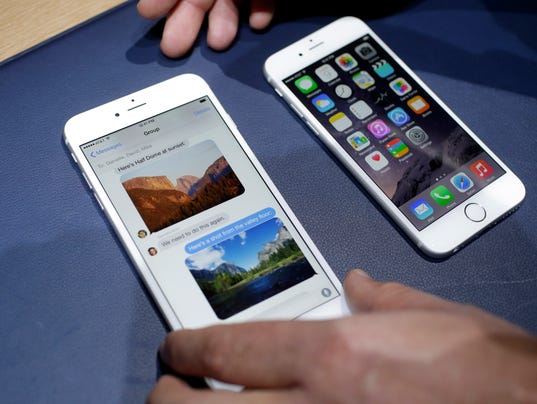
The launch of the ultra-popular iPhone 6 and 6 Plus propelled Apple to the No. 1 position for worldwide smartphone sales, commanding a 20.4% share of the market. Samsung finished second, with 19.9%, down nearly 10% from a year ago.
Samsung is being squeezed in the middle between Apple and Chinese vendors offering phones at lower prices.
"With Apple dominating the premium phone market and the Chinese vendors increasingly offering quality hardware at lower prices, it is through a solid ecosystem of apps, content and services unique to Samsung devices that Samsung can secure more loyalty and longer-term differentiation at the high end of the market," Gartner research director Roberta Cozza said in a statement Tuesday.
Samsung hopes to reignite interest in its smartphone business with the unveiling of the Galaxy S6 and S6 Edge during this week's Mobile World Congress in Barcelona. Both devices are slated to launch this spring.
For Apple, it was the company's best quarter ever, selling 74.8 million smartphones worldwide. The shift to larger screens was met by big demand in the U.S. and China.
Apple shares are up slightly, to $129.18 per share.
Also making big gains: Chinese smartphone makers Huawei and Xiaomi. "They are producing higher-quality devices with appealing new hardware features that can rival the more-established players in the mobile phone market," Cozza said.
Xiaomi experienced the largest jump among global smartphone makers, more than tripling smartphone sales numbers compared with a year ago.
Overall, sales of smartphones worldwide topped 1.2 billion, up 28% from last year.

Comments

Popular posts from this blog

First Take: Back to the future — Nasdaq 5000 circa 2015

The once-deflated Nasdaq has fully reflated. For the past 15 years, chatter about Nasdaq 5000 was mainly in the past tense, a historical remnant of the dot-com stock bubble era. But today, for the first time since March 2000, the Nasdaq composite — powered by Apple, the world's most valuable company and maker of the iPhone, and a fresh wave of innovation in social media, digital technology and biotech — is back above 5000 and very much alive in the current events debate. Way back when, on March 9, 2000, when the Internet was in diapers and investors were betting that the World Wide Web would be a moneymaking investment of epic proportions, the Nasdaq and its army of newly minted dot-com stocks skyrocketed to its first close above 5000, up an eye-popping 111% from a year earlier. At the time, "Nasdaq 5000" elicited a 1969 "man on the moon"-type awe from investors ranging from Wall Street titans to taxi drivers and hairdressers who viewed "Net stocks...

GOP Bombs On Homeland Security

In a squishy and unsatisfying resolution that funds Homeland Security for a week, the GOP’s internal tensions bubble to the surface once again. It used to be that Congress was broken, and was forced to repeatedly kick the can down the road. Now it seems that Congress can’t even properly kick the can down the road. At a time of alarming national security threats, the House of Representatives brought the nation to the brink of a government shutdown of the Department of Homeland Security. On Friday evening, dozens of conservative Republicans revolted against a plan push the deadline back three weeks, joining with Democrats to vote down a simple funding bill to continue the agency’s funding. Conservative Republicans objected because they wanted Congress to rebuke President Obama over his immigration executive action, which they view as an illegal “amnesty.” Democrats protested because they wanted a “clean,” long-term spending bill that would provide certainty for the Department ...

In U.S. visit, Netanyahu warns an Iran deal could threaten Israel's existence

(Reuters) - Israeli Prime Minister Benjamin Netanyahu warned the United States on Monday that the nuclear deal it is negotiating with  Iran  could threaten Israel's survival and insisted he had a "moral obligation" to speak up about deep differences with President Barack Obama on the issue. Even as he set the stage for a Washington visit that has strained U.S.-Israeli relations, Netanyahu sought to lower the temperature ahead of his controversial address to Congress on Tuesday, saying he meant no disrespect for Obama and appreciated U.S. military and diplomatic support for Israel. Netanyahu left little doubt, however, about his objections to ongoing talks between Iran and world powers, which he said would allow Tehran to become a nuclear-armed state. "As prime minister of Israel, I have a moral obligation to speak up in the face of these dangers while there’s still time to avert them," Netanyahu told a cheering audience at the annual con...